Change in 401(k) rules raises questions
Our exchange daughter from Spain is here for the entire month of August. Ane first came to us when she was 16; she is now 25. She's as connected to our family as any of our young adult kids. It's been a great visit with Ane and her boyfriend.
When arriving, Ane had four American dining goals: Chick-Fil-A as soon as she landed, deep-dish Chicago pizza, my famous homemade pork tacos and a home-smoked brisket. By last weekend all these goals had been achieved, except for the brisket. My wife and Ane wanted Sunday to be brisket day.
For my meat smoking brethren, you know smoking brisket requires planning. The right size brisket must be procured, the rub determined, the smoking supplies acquired and most of all the time. Lots of time. Unfortunately, life had been very busy and I did none of the required planning.
Returning home late Saturday night from a birthday party in Indianapolis, I rushed to Strack's to buy a brisket. There was only one left in the case: an 11 lb. 7-ounce monster. I looked at my watch -- it was 8:30, dinner would be at 6:00 the next evening. I did the math. It could be done. I grabbed the brisket.
As I rushed my grocery bags to the truck, thunder rumbled in the distance. A long, restless and obsessive night lay ahead. It was smoke master game time. I would not disappoint.
Properly smoked brisket is magical. The key to the magic is time. Brisket smokes under low heat in pursuit of the ideal internal temperature of 205 degrees. While brisket is technically edible at an internal temperature of around 180 degrees, achieving brisket master status -- with meat tender enough to fall off the fork -- requires reaching a minimum of 201 degrees. Every brisket is unique; each pound of meat could require anywhere between one and two hours to smoke. The keys are patience and meal timing.
Brisket smoking provides the perfect frame of reference for a substantial change that recently occurred involving 401(k) plans. Employer-sponsored 401(k) plans are an absolutely mission-critical tool in American personal finance. According to a CBO white paper from 2022, Americans hold about 40% of their total accumulated wealth in tax-advantaged retirement plans. The aggregate amount of these American retirement assets is nearly $9 trillion.
Which means, to put it bluntly, 401(k) assets are too important to screw up. Employers sponsoring plans, custodial firms offering investments, and advisors providing advice to these plans are all subject to very high standards. Each is required to serve plan participants as a fiduciary, meaning the best interests of the investor must drive all decisions and actions. The regulatory journey resulting in the modern iteration of the 401(k) plan has been long, but as a plan advisor, I feel most 401(k)s now offer a cost-effective, well-constructed retirement planning platform.
$9 trillion however, is a lot of capital, and while the dominant type of investment product offered to 401(k) investors is stock and bond mutual funds, other types of investment product providers seek to access capital from this pool as well. An August 7th executive order from the Trump administration opened the door to one of them: private equity.
Private equity refers to the process of investing capital in companies not traded on public exchanges. As there is no public market for these investments, private equity investments by their very nature are not liquid, which means investors have limited or no access to their capital while the investment moves through its life cycle.
Private equity is extremely important in a free enterprise economy. Through this form of investment, sophisticated high-net-worth and institutional investors have traditionally amassed capital to fund startup companies and potentially benefit from entrepreneurial innovation. On paper, extending access to private equity investment options to 401(k) participants looks like "leveling the playing field," enabling smaller investors to gain access to investments historically relegated to the wealthy. As in all things financial, however, the devil is in the details.
In the case of private equity, the details can be absurdly complex. Investment costs, financial controls, risk disclosure and a myriad of other details can be so opaque and complicated that the level of expertise required to navigate this field is possessed only by specific varieties of professional investors. Which brings us back to the brisket.
The key to both brisket and private equity is time. Funds invested in private equity aren't stored in a stock which can be traded to other investors -- the funds are deployed to pay salaries, buy technology, and run a business. Private equity investments do not, and should not, offer access to invested capital until the company is positioned for a liquidity event, which will always take years, sometimes decades. The very act of providing liquidity potentially required for retirement investors has the capacity to change the lifecycle of the investment itself, like pulling a brisket at 180 vs. 205. Maybe done, but not great. I have a ton of questions about the possibilities opened by this development, and it looks like we will have about six months to get some of them answered.
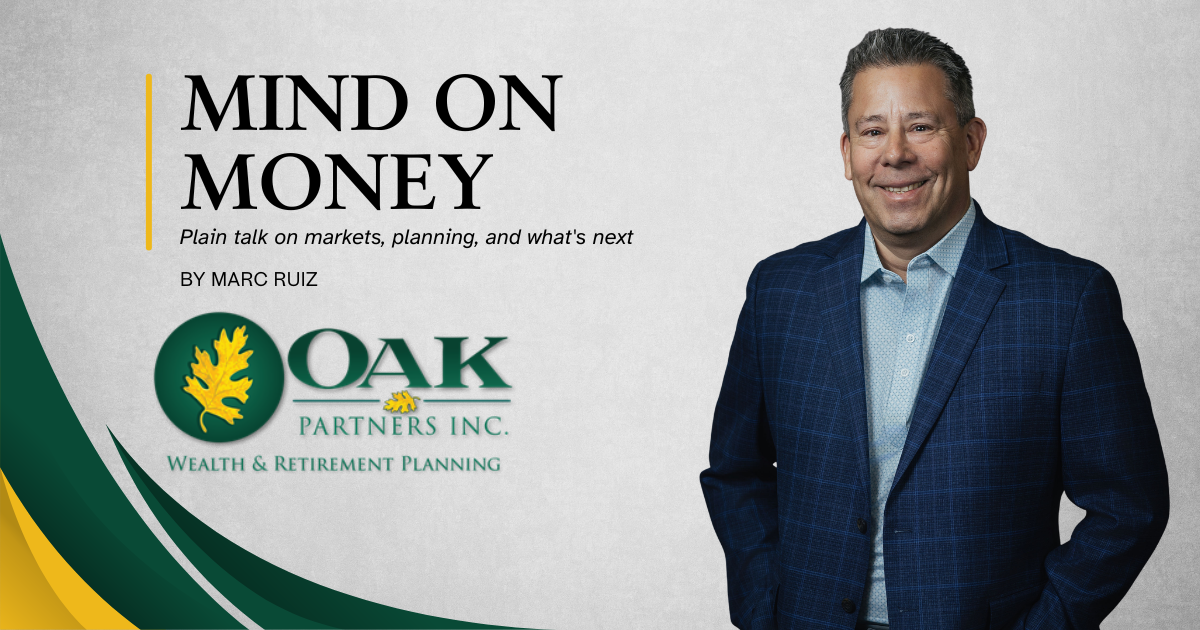
The opinions voiced in this material are for general information only and are not intended to provide specific advice or recommendations for any individual. Stock investing includes risks, including fluctuating prices and loss of principal. No investment strategy can guarantee a profit or preserve against loss. Past performance is not a guarantee of future results. Marc Ruiz is a wealth advisor and partner with Oak Partners and registered representative of LPL Financial. Contact Marc at marc.ruiz@oakpartners.com. Securities offered through LPL Financial, member FINRA/SIPC.